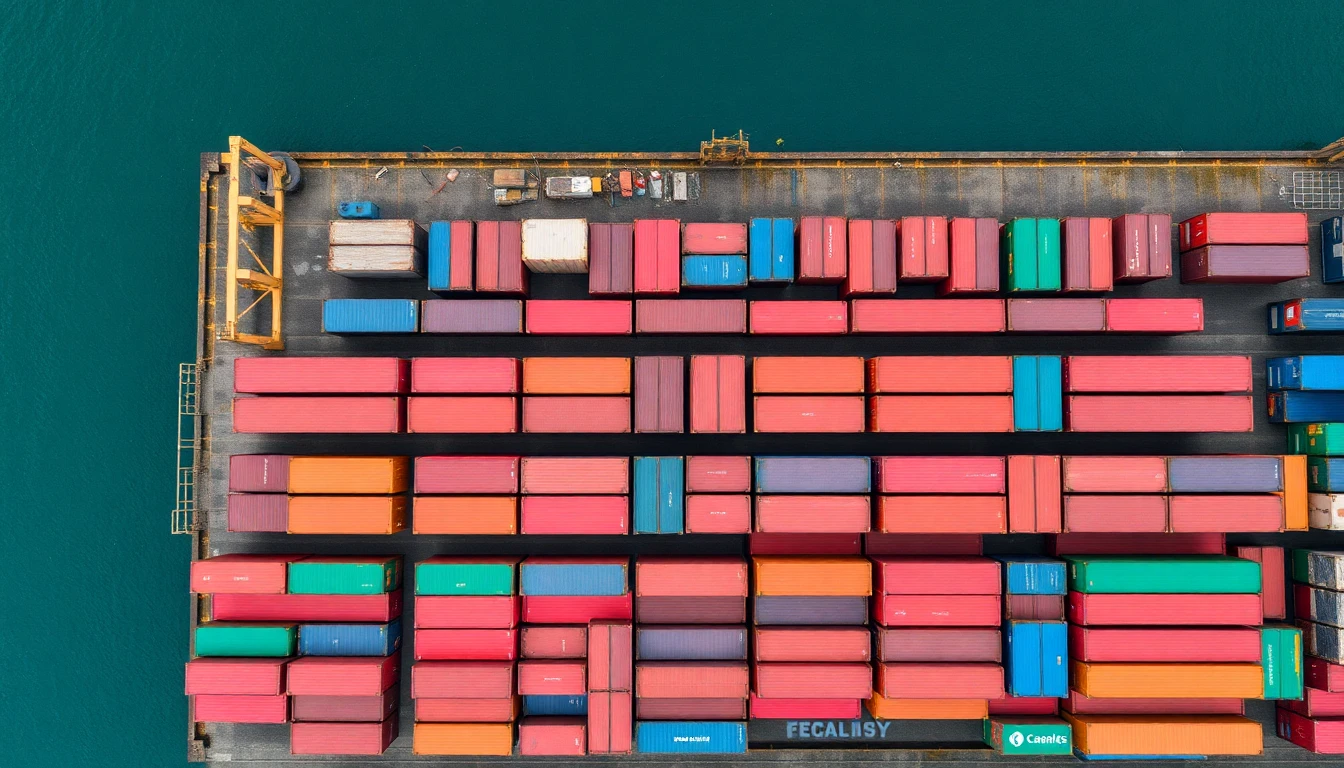
China is Indonesia's #1 import source. This guide covers everything you need: ACFTA preferential tariffs, supplier vetting, shipping methods (sea vs air), customs clearance, and how to calculate total landed cost.
China is Indonesia's largest source of imports — over $60 billion annually across electronics, machinery, textiles, chemicals, and consumer goods. The trade route is well-established, the costs are predictable, and the regulatory pathway is well-known.
But for first-time importers, the process can be overwhelming. This guide walks through every step from finding a Chinese supplier to delivering goods at your address in Indonesia: tariff structure under the ACFTA (ASEAN-China Free Trade Agreement), shipping methods, customs clearance, common pitfalls, and how to calculate your total landed cost.
Beyond the obvious manufacturing scale advantage, two specific reasons make this trade route attractive:
Under the ASEAN-China Free Trade Agreement, most products imported from China to Indonesia qualify for 0% import duty when accompanied by a valid Form E (Certificate of Origin under ACFTA). This applies to over 90% of tariff lines.
To qualify:
For products that would otherwise face 5-15% MFN duty, ACFTA savings are substantial — often $5,000-50,000 per shipment.
Direct shipping routes from major Chinese ports (Shanghai, Ningbo, Shenzhen, Qingdao) to Indonesian ports (Tanjung Priok in Jakarta, Tanjung Perak in Surabaya, Belawan in Medan) run weekly or more frequently. Air freight from Guangzhou, Shenzhen, and Hong Kong reaches Soekarno-Hatta in 3-5 hours.
The two main platforms for finding Chinese suppliers:
Vetting checklist before placing first order:
Every product has a Harmonized System (HS) code that determines:
Search HS codes on Kickrate to find your product's exact 8-digit Indonesian classification with current duty rates and required permits.
Total landed cost = Product cost + International shipping + Insurance + Indonesian duties + IOR/clearance fees + Domestic delivery
Indonesian duties on imports include:
Use the import duty calculator to see actual numbers for your shipment.
| Method | Transit Time | Cost | Best For |
|---|---|---|---|
| Sea LCL (Less than Container Load) | 14-21 days | $50-150 per CBM | Small to medium loads (1-15 CBM) |
| Sea FCL (Full Container) | 14-21 days | $1,500-4,000 per 20ft / $2,500-6,500 per 40ft | Large loads, lower per-unit cost |
| Air freight | 3-7 days | $4-8/kg | Urgent, high-value, low-weight |
| Courier (DHL/FedEx/UPS) | 3-5 days | $8-25/kg | Samples, small orders, documents |
For most B2B shipments, sea freight is the default. Air freight kicks in when goods are time-sensitive or when product value is high enough that the cost difference is small relative to inventory holding cost.
Indonesia requires a locally licensed entity to be the importer on customs documents. If you don't have your own Indonesian PT with API license, you need a licensed Importer of Record (IOR).
The IOR:
Standard documents your supplier should provide:
For products requiring permits, also:
Once goods arrive at Indonesian port:
Typical clearance time: 2-7 business days for clean shipments with all permits in place.
After release, goods are transported from port to your final address. Same-city delivery (Jakarta from Tanjung Priok) is typically same-day or next-day. Outer islands take 3-7 days.
Some Chinese suppliers offer to "declare lower" to reduce import duty. Don't do this. Indonesian customs has reference price databases. When declared value is significantly below expected, customs challenges it, demands proof of payment, and can impose penalties of 100-400% of the duty difference.
Forgetting to request Form E from your supplier means paying the full MFN duty rate instead of 0%. On a $50,000 shipment with 10% normal duty, that's $5,000 left on the table. Always confirm Form E availability before placing the order.
Suppliers sometimes use generic HS codes that don't match the actual product. If Indonesian customs reclassifies, you pay back-duty plus potential fines. Verify the correct HS code before shipping.
Many products from China require Indonesian permits before they can clear customs:
Sending the goods before permits are in hand means weeks of demurrage charges at the port.
Common Incoterms for China-Indonesia trade:
For first-time importers, CIF or DDP simplifies. For experienced importers, FOB or EXW gives more control over shipping costs.
Sending payment to an unverified supplier is the most common way to lose money. Use Trade Assurance, video-verify factories, request references, and start with small orders.
For a sample shipment of consumer electronics with $30,000 product cost from Shenzhen to Jakarta:
| Cost Item | Amount (USD) |
|---|---|
| Product cost (FOB Shenzhen) | $30,000 |
| Sea freight LCL (5 CBM) | $400 |
| Insurance (~0.5% of CIF) | $150 |
| CIF Value | $30,550 |
| Indonesian import duty (0% ACFTA) | $0 |
| VAT (PPN 12%) | $3,666 |
| Income tax (PPH 2.5% with API) | $764 |
| IOR service fee (~3%) | $900 |
| Customs broker / clearance | $300 |
| Domestic delivery (Jakarta) | $200 |
| Total Landed Cost | $36,380 |
Without ACFTA, add $1,500-4,500 in import duty (depending on product). Without API (using IOR with API-U pass-through), the PPH jumps to 7.5% — adding $1,527.
Sea freight: 14-21 days door-to-door including clearance. Air freight: 5-10 days. Courier: 3-7 days.
There's no Indonesian minimum — even single units can be imported. But shipping cost-per-unit drops dramatically above 1 CBM. Below that, courier services are often cheaper than dedicated freight.
You need either your own Indonesian entity with import license OR an IOR service that imports under their license on your behalf.
No — PPN applies to all imports. But if your business is VAT-registered in Indonesia, you can claim the PPN as input tax credit when you sell domestically.
Some Chinese product categories are subject to anti-dumping duty in Indonesia (currently: certain steel products, hot-rolled coil, biaxially oriented polypropylene film). Check your specific HS code on Kickrate's HS search.
Suppliers may charge $20-100 for issuing Form E. Compared to thousands in saved duty, it's worth it.
You can still import — you'll just pay the standard MFN duty rate instead of 0%. Calculate whether the supplier's price advantage covers the duty difference.
Indonesian customs is increasingly aggressive on IP enforcement. Counterfeit goods are seized and destroyed; importer faces fines and possible criminal charges. Legitimate brand-licensed products are safe.
Sample shipments under specific value/quantity thresholds may qualify for relief, but not all products qualify (many Lartas products still require permits even for samples).
Kickrate handles imports from China to Indonesia daily. We act as your IOR, file the PIB, claim ACFTA preferential rates, manage Lartas permits, and deliver to your final address. Contact us for a free landed cost estimate, or search HS codes to see Indonesian duty rates for your product.
